
 2 hours ago
2
2 hours ago
2

The streaming-skeptical cinephile faces a dilemma in 2026, especially when it comes to watching movies at home. Increasingly, movies are available via rentals that funnel money to mega-corporations including Amazon or Apple; digital “purchases” from those same companies that can actually be revoked at any moment; or, most enticingly but still somewhat inconveniently, well-curated physical media special editions that treat films with the respect they deserve (sometimes even respect they don’t, depending on the title) while taking up a lot of shelf space and hitting your wallet hard. Plus, as vinyl aficionados know, bespoke physical media can also be severely limited in terms of where you can actually play it. Basically, almost everyone in the home-video space is trying to either be Amazon or the Criterion Collection.
Ash Cook, the former Sundance programmer who founded the new distributor Video StoreAge (pronounced like “storage”), is trying to figure out a third way. He described Video StoreAge’s products – indie movies sold on USB drives – as “like a DVD in the present tense. It’s a way to have a physical copy of a movie, but in this case you can play it on your computer. It has digital utility.” Like almost anything else these days, Video StoreAge is available as a subscription, with quarterly collections of five features and five shorts. The first drop includes Vera Drew’s buzzed-about The People’s Joker, a homemade superhero comedy that reappropriates many elements of the Batman mythos into a trans coming-out story. (Honestly, it’s more fun than those Joaquin Phoenix movies and might understand the Joker character better, too.) But they also sell single films, including Drew’s, or any combinations of available films as a sort of digital indie-movie mix tape on those format-flexible USB drives. (The quarter’s shorts package is included with every movie regardless, an automatic special feature.)
Whatever the combination, customers get to own that hard-yet-digital copy in perpetuity, rather than being subject to the whims of a digital library that companies reserve the right to alter as needed – unless you actually copy the right format of file onto your hard drive, which is often easier said than done. On the artists’ side, Video StoreAge obtains print rights only for the titles in question, leaving film-makers with other options for distribution should the opportunity arise, and it splits the profits 50/50 with the artists. Cook considers buying a copy from Video StoreAge a way to “pay someone pretty directly and get Amazon out of our business”.
Cook found his way into distribution through his festival experience, which in turn he found through a youthful love of indie film-makers including Gregg Araki and Jennifer Reeder. “I just knew my favorite movies all had the laurels,” he said, laughing, referring to the laurel graphics that appear in movie ads to show that a movie has played Sundance, Cannes or wherever else. As a Vassar College student, he was able to secure a winter-break gig doing “field work” by volunteering at Sundance, using his experience booking campus concerts to work in festival operations. Learning about the ins and outs of the festival got him into the programming side.

“As a programmer, you’re in it with film-makers at this very nascent moment in the life cycle of their films,” he said. “A big part of the job is relationship management. You’re talking to film-makers, acquisitions executives, sales agents, everybody.” In Cook’s experience, they all agree on one thing: distribution isn’t working the way it used to, when Sundance used to fuel big-money sales and splashy ad campaigns. “There’s such consensus around that,” Cook said. “And I started feeling like, OK, we can all agree about that forever. But what’s just one thing that we’re going to do?” He came to realize that the festival wasn’t necessarily in the position to help solve that problem. “A lot of people would ask us as representatives of a festival, what are we doing about that? And that’s not the job of an exhibitor of a festival programmer. In fact, it’s desperately important that [commercial distribution is] not their main concern.”
This form of distribution tries to split the difference between digital convenience and the sense of curation that has inspired what Cook describes as a current renaissance of physical media. “Everyone’s feeling the bloat of streaming,” he said. “We’re like kids in a candy shop and now we have cavities. The audience is there saying, this doesn’t feel very good; I want something that feels more intentional, more human again. The most difficult assets are all there: hungry audience, great movies. And the issue is just that they can’t get to each other?!”
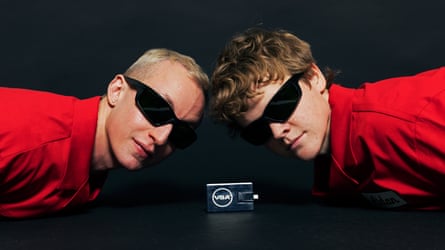
To facilitate that meeting of film and audience, Video StoreAge partnered with Slamdance, a long-running Sundance alternative, making two of that festival’s titles, Danny Is My Boyfriend and The Bulldogs, available as limited-edition copies during the festival, ahead of a forthcoming post-festival release. Viewers could own a copy incredibly fast – hardly any movies are available to buy right out of a major film festival – while still needing to make some intentional effort greater than the usual scroll through Netflix.
Cook is betting that this is the right moment for a new form of physical media distribution. “Everyone that’s alive right now, and probably just right now, has some relationship with or recent memory of the role of physical media in our lives,” Cook said. He went on to cite HitClips, a primitive early-aughts tech that embedded a minute-long clip of a hit pop song on a tinny, tiny self-playing device – and, of course, VHS. “We had five or six tapes that we watched over and over again, like The Land Before Time. The way we interacted with those tapes, they were like our friends!”
Whatever the outdated format, Cook said, “we all have some experience of how scarcity and friction heightens our attention, focuses us on a piece of material, that is really pleasurable.” Video StoreAge is attempting to do that with tech that shouldn’t become quite so disposable as HitClips or even the still-lingering DVDs. It might not be enough for you to cancel your Netflix subscription, as Cook has, but it might make watching a movie at home a little more like a trip to the cinema.
-
Video StoreAge is currently online and is holding several launches on 18, 19 and 21 March in Los Angeles






 English (US) ·