
 22 hours ago
2
22 hours ago
2

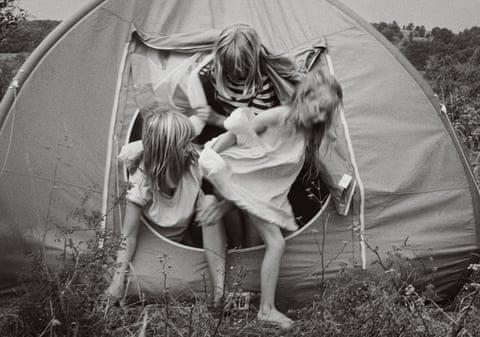
Once the home of Australian artist Arthur Boyd and his wife Yvonne, Bundanon – set across 1,000 hectares on the NSW south coast – is now home to an art museum, where the latest exhibition celebrates the Boyd women whose artistic careers have been overlooked.
Among them is Arthur’s sister Lady Mary Nolan (nee Boyd), who had four children with her first husband, the artist John Perceval, before moving to London and marrying Sidney Nolan in 1978. A painter and a potter, Mary is less known for her photographs, 48 of which are now on show after being unearthed at the National Library of Australia
The Hidden Line: Art of the Boyd Women is open at Bundanon gallery until 15 February
Mon 19 Jan 2026 15.00 CET
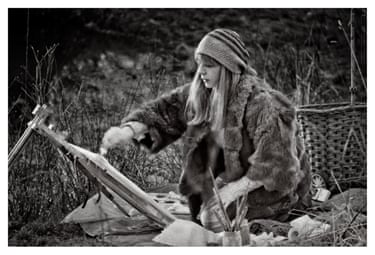
Tessa painting, Hampstead Heath, early 1970s
Mary Nolan and John Perceval’s four children – Matthew, Celia, Alice and Tessa – all became artists in their own right. And it is the latter pictured here, ‘looking the epitome of the young artist of the time’, says curator Sophie O’Brien. ‘Mary Nolan’s archive contains hundreds of photographs of the artists in the family painting the landscape – it was clearly an everyday activity. Tessa’s painting practice is highly detailed and holds innumerable layers of tiny flicks of paint, capturing colour, light and form.’Photograph: All photos featured here are by Mary Nolan, via the National Library of Australia, courtesy of the Mary Nolan estate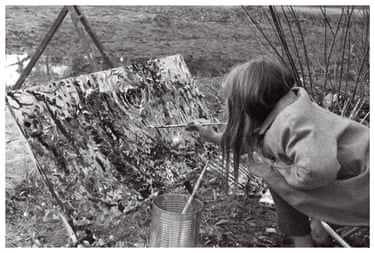
Alice painting on her father’s picture, c 1966
‘The children of the Boyd and Perceval families spent much of their childhoods alongside their artist parents, painting with them in studios and outdoors,’ says O’Brien. ‘This unique, immersive education connected the younger generations, most of them becoming artists themselves.’ Alice, pictured painting over a painting by Percival, was the youngest of Nolan’s children, and travelled to London with her mother to be with her siblings after Nolan and Perceval divorced. Alice’s daughter Kitty now makes ceramics, with some on show at Bundanon too.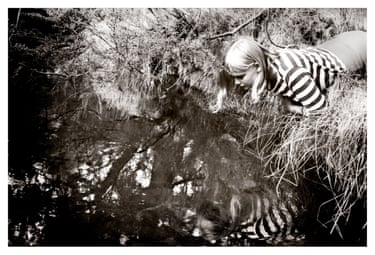
Celia, Paddy’s River, c 1965
‘This photograph of [Mary’s daughter] Celia is reminiscent of images of Narcissus, a mythological figure that her uncle artist Arthur Boyd painted throughout his working life,’ says O’Brien. ‘Here, however, Celia gazes into the water, seemingly more captivated by the reflected landscape than her own image. This remains true of her ongoing largely en plein air (outdoor) painting practice, which has taken her around Australia.’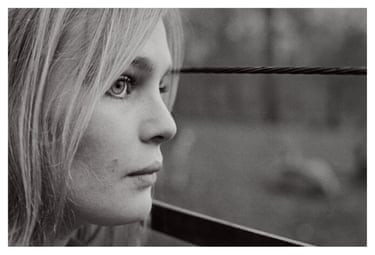
Celia, 1968
‘Nolan’s intimate portraits of the family – and particularly her daughters – are both loving and clear-eyed. Her images reflect young women who are forming their relationship to an outside world, as creative people, at a time when women artists were greatly overlooked. Nolan’s photographs offer a “vote of confidence” and encouragement for these young artists.’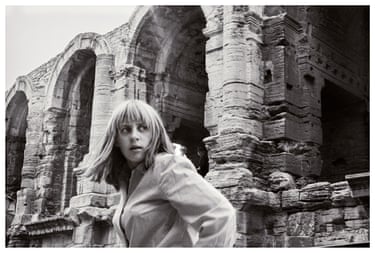
Tessa, Arles, 1964
This photograph was selected by O’Brien as the hero image for the exhibition. ‘It represents so much about the women of this family and the times they were growing up in,’ she says. ‘Two men in suits and hats – seemingly from another time – stand in the monument behind Tessa, looking down at her; in motion, she is actively moving into a future. As a fan of films from this era, I found this image to be hugely evocative.’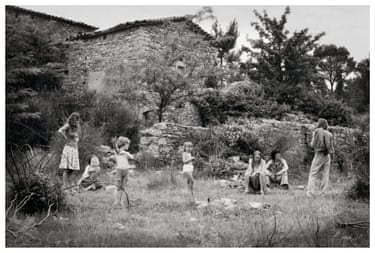
Picnic at Matthew’s ruin, near Anduze, south of France, c 1973
This photograph offers a longer view of the family around a decade later, in a tableau format. ‘Nolan was aware she was capturing the story of the family, and the role landscape played as a part of the narrative.’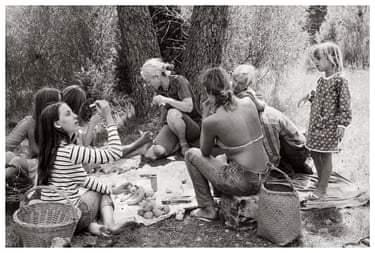
Family picnic under the sweet chestnut trees, Anduze, c 1973
The Boyds favoured ‘makeshift shared meals and simple ways of living’, O’Brien says, ‘with more attention and energy being paid to the importance of the creative life.’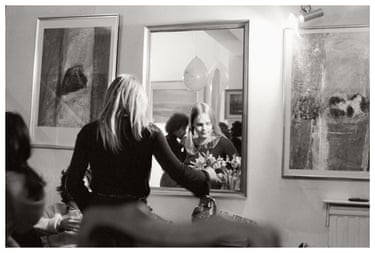
Celia at Jamie Boyd’s house, Hampstead, 1970s
This photo of Celia was taken at the house of Arthur Boyd’s son Jamie, also an artist. ‘The houses of the family were meeting places for artists and visiting Australians in the 1960s and 70s. They were key participants in the vibrant cultural life of London during these decades,’ O’Brien says.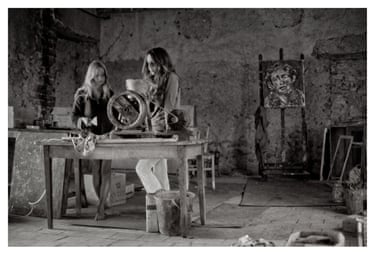
Alice and Fliss, Matthew’s studio, France, 1971
Alice and Fliss, a family friend, confer while they mix paints. These simple machines allowed artists to create the exact paint colour they needed.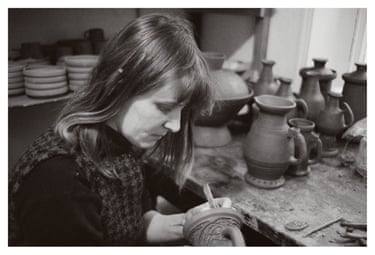
Hermia Boyd decorating pots, Islington, London, 1964
Hermia Lloyd Jones joined the Boyd family when she married Arthur’s brother David in 1948. ‘Nolan documented many artists in their studios, but these photographs closely record Hermia Boyd’s focused approach to her practice,’ says O’Brien. ‘Boyd was prolific, turning her hand to many different mediums.’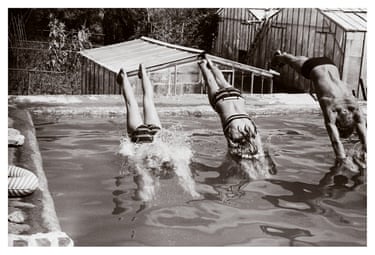
Sam Atyeo’s pool near Vence, south of France, 1964
Australian painter Sam Atyeo was one of the many acclaimed artists in the Boyds’ circle of friends, with a home in the south of France that Mary visited in the 1960s. ‘Seemingly like everyone else’s family photos – the moment the kids jump in the pool – this photograph is more than a record of summer fun,’ says O’Brien. ‘Nolan has an acute sense of recording phenomena, and captures the stages of a dive through the movement of the three bodies.’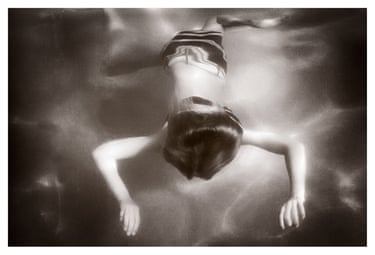
Tess in Sam Atyeo’s pool near Vence, south of France
‘This image reads as so contemporary and has a decidedly haunting aspect – a swimmer floats, the light refracting through the water. We can feel the underwater silence, the stillness.’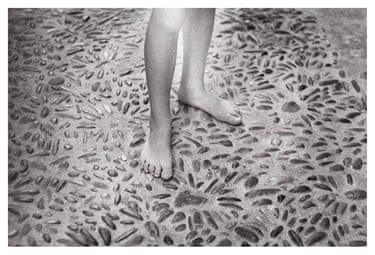
Alice’s feet, St Paul de Vence, 1964
‘Nolan had an extraordinary capacity to pay attention to the details of the everyday – a gesture, a glance, or in this case a child’s bare feet on stone streets in a country town,’ says O’Brien.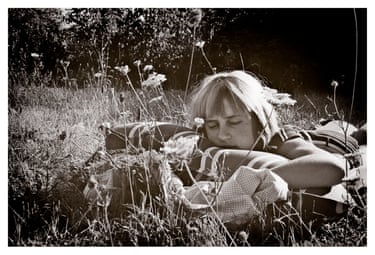
Tess in Sam Atyeo’s garden near Vence, south of France, 1964
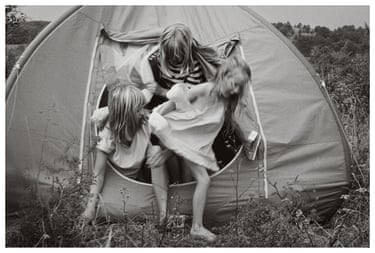
Camping on the journey through France: Tessa, Celia, Alice
‘The formal structure of this photograph is wonderful – it’s all angles, knees and elbows, heads sticking out in different directions,’ says O’Brien.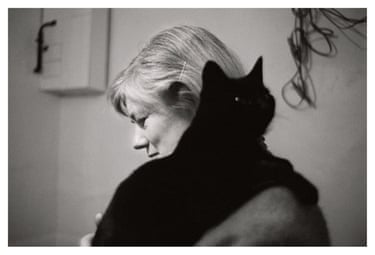
Yvonne with a black cat, c 1963
Many photographs of Arthur Boyd’s wife Yvonne Boyd (nee Lennie) exist in the Bundanon archives, says O’Brien, ‘but Nolan’s astutely capture her thoughtful reflectiveness’. The black cat was named Nebuchadnezzar, after the longest-reigning king of the Babylonian dynasty.• Steph Harmon travelled to Bundanon as a guest of Bundanon art museumExplore more on these topics








 English (US) ·