
 4 hours ago
1
4 hours ago
1

‘Penguins? In Snowdonia?” I asked incredulously. “That’s right!” came the enthusiastic reply from our newest hostel companion. We were standing in the large kitchen of The Rocks hostel in Capel Curig, a village in the north-east of Eryri national park (Snowdonia), chatting amiably while waiting for our teas to brew.
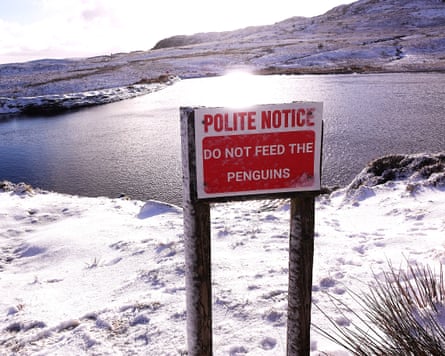
“Head up Moel Siabod to the lake, and that’s where the penguins are. You’ll see a sign warning about feeding them,” he said. “But even if they’re hiding and you don’t see one, it’s one of the best walks in the area.”
Spotting a penguin in the Welsh mountains seemed unlikely, but that hardly mattered, least of all to my 11-year-old son, who was thrilled by the idea of a day spent hunting for penguins. And with that, our daily adventure plans were settled, inspired not by an internet search or guidebook, but by the easy exchange of recommendations that happen so often in the communal spaces of hostels.
It was our fourth and final day at The Rocks and, to my relief, we’d settled into a comfortable rhythm: exploring the mountains by day and spending evenings relaxing at the hostel with fellow residents. Initially, my suggestion to try something different for our family holiday by staying at a hostel had been met with scepticism. My husband, haunted by memories of school trips, imagined bleak dormitories with creaking iron beds and draughty communal spaces, while our sons (one teen and one tween) were unenthusiastic about shared living spaces and polite chit-chat.
Still, I was eager to give it a go. Lately I’d begun to feel uninspired by holidaying in the UK. Endless scrolling through lists of private rentals – cottages, lodges, cabins – was exhausting and downright unaffordable. Seclusion, it seemed, had become highly prized and came with a hefty price tag. Yet I found myself thinking back to childhood memories of hostel holidays: communal dinners filled with laughter and nights spent tearing around with other kids. It made me wonder why privacy was so coveted.
In the golden era of travel, around the late 19th and early 20th centuries, meeting new acquaintances while away was common. Think of Lucy Honeychurch’s transformative trip to Florence in EM Forster’s A Room With a View, shaped largely by her meeting the Emersons in their pensione. Agatha Christie’s Death on the Nile also reminds us how trips were once far more social affairs – even if the passengers did keep bumping each other off. By retreating into isolation, have we lost the very essence of travel: the pleasure of meeting new people; sharing stories; hearing word-of-mouth tips; and stepping outside our familiar routines?
Hostels offer a gateway to those old ways of travel. First established in the UK in the 1930s to provide affordable accommodation, especially for young travellers, while also encouraging outdoor pursuits and socialising, their core purpose has changed little over time. What has evolved are the standards and the demographics. Today, private rooms are commonplace alongside bunk rooms, and guests range from solo travellers and students to families, couples and groups of friends.
To my delight, standards at The Rocks were exceptional: bright and stylish interiors ran throughout, with Scandi-style wooden furniture and colourful cushions. The fire in the shared lounge was a beacon of warmth, while the firepits outside allowed us a night of stargazing and marshmallow toasting. Upstairs, our snug but smart private family room was cosy and warm, kitted out with comfy mattresses, soft sheets and Welsh woollen blankets. Even my luxury-loving eldest son was impressed.
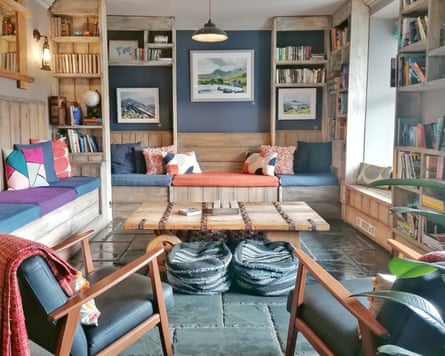
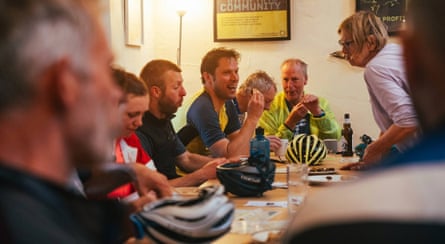
But what about the social element? Would this be an opportunity to meet like-minded folk, or just a series of awkward encounters to be endured before scuttling away to hide in our room? I needn’t have worried. Conversations flowed easily between guests, whether cooking dinner in the well-equipped kitchen, eating together in the airy dining room, surrounded by maps, games and puzzles, or gathering around the fire. There was a comforting pattern of change, with people coming and going, and new friendships forming quickly.
After our daily adventures, we looked forward to returning to the hostel and sharing our experiences. One evening, over cards and a glass of rum with two lads from the Midlands, we learned the recipe for “mountain doughnuts” (banana, jam and peanut butter spread between slices of bread, wrapped in tinfoil and gradually squished in a backpack during a hike). I picked up tips on thermal gloves from an army nurse who shared my despair over cold fingers, and talked 90s rave music with a couple from Spain. The children made friends instantly, disappearing for snowball fights and board games until bedtime. There was no pressure to socialise – some guests retreated to their rooms or books, others dipped in and out of communal life – and that flexibility was part of the appeal.
After a challenging few years through Covid, hostelling is enjoying a quiet revival. According to Sam Dalley, founder of the Independent Hostels network, “hostelling is in better health than ever. People want inexpensive stays where mingling is part of the adventure. There are more hostels now than at the height of the youth hostel movement in the 1950s.”
With places such as The Rocks combining comfort with affordability, privacy with community, the future looks bright for British hostelling, proof that meeting new people and sharing experiences can still be found at the heart of travel.
As we hiked up Moel Siabod, with the muffled crunch of snow underfoot and the promise of mountain doughnuts in our backpacks, I felt deeply satisfied. The trip had sparked an appreciation for something I hadn’t realised our holidays were missing; a sense of community. From now on, hostels will be my go-to for adventures like this, rather than the closed doors of private rentals. We never did see those elusive penguins, and we’re still baffled by the mysterious “Do not feed the penguins” sign perched on that remote Welsh mountainside, but who knows what adventures our next hostel stay may lead to?
The Rocks has dorm beds from £36pp, private family rooms from £115.60









 English (US) ·