
 3 hours ago
1
3 hours ago
1

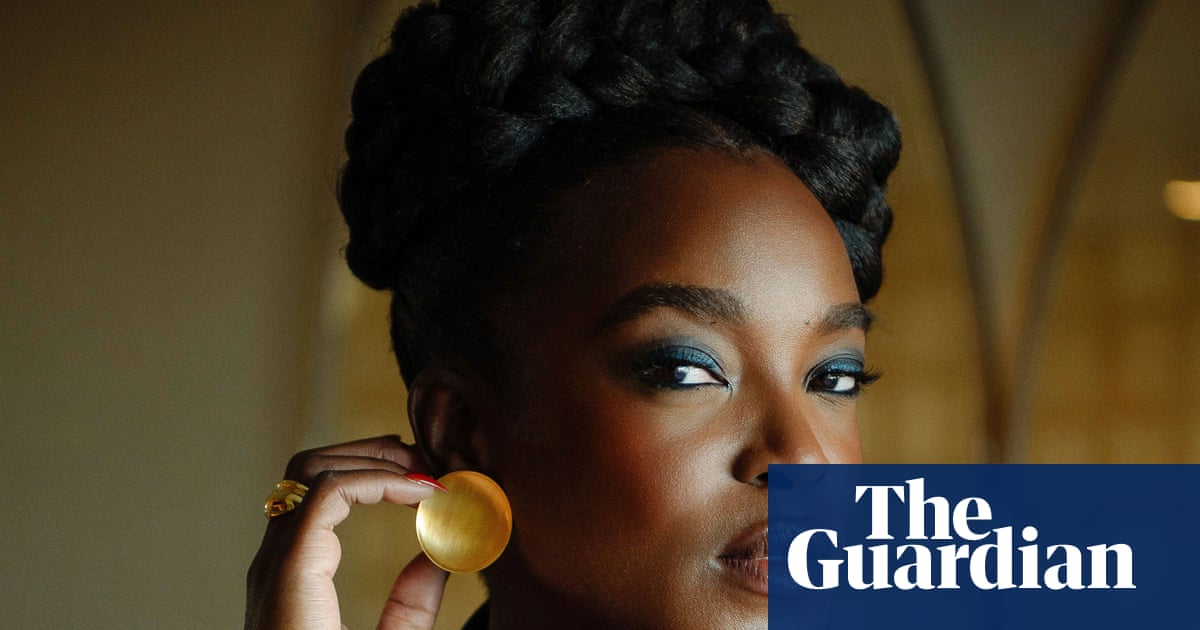
Whitney White is practically swooning. “I have more respect and love for William Shakespeare than I can honestly communicate,” she says on a video call from Stratford-upon-Avon. When she went to Holy Trinity Church to visit his grave, she says: “I just wept, because the language is so beautiful to me.”
White’s first encounter with Shakespeare’s work was in Chicago at high school, where A Midsummer Night’s Dream unleashed her inner “theatre nerd”, she says. “I remember thinking, ‘Shouldn’t all theatre have music and dance and text and fights and be as full as possible?’ Then you grow up and start doing theatre – and we segment the business into musicals and plays.”
Except that White didn’t. A Tony-nominated director (for Jaja’s African Hair Braiding), performer and songwriter, her first exposure to theatre was at her grandfather’s church, which had a 50-strong choir. So it follows that the musicality in Shakespeare is key for her, the metre every bit as valid as the meaning. She realised that when she took a theatre programme at Brown University in Rhode Island. “I was assigned what you call an epic speech. I will never forget the feeling when I finished it. It was like the sky clearing.”
Singing was “the first thing I ever did”, she says. “And I was like, ‘Wow, Shakespeare makes me feel the same way. It feels like a song.’” Although she recognises so much of her world in his, she says that: “For so long, we were told that only some people could do these stories. I think that’s not true. I think whoever Shakespeare was, he made them for all of us to be doing them.”
But as a performer, she found she would only be cast in minor roles such as the nurse in Romeo and Juliet or Maria in Twelfth Night. That was the extent of the diversity of casting 10 years ago. “To be a leading lady still felt reserved for some people – and I think that’s really what kicked all of this off.”
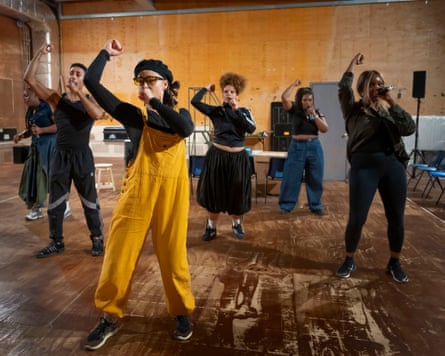
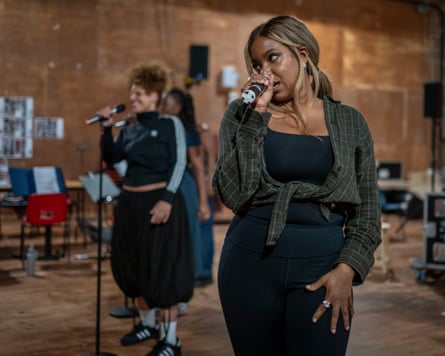
She is referring to her boundary-breaking gig-theatre, All Is But Fantasy. About to be staged by the Royal Shakespeare Company in two parts, it mixes characters from various Shakespeare plays: Lady Macbeth and Othello’s Emilia in one, Juliet and Richard III in the other.
When she began the project, music was paramount. “I read Macbeth and I heard rock’n’roll. To me, Lady Macbeth sounded like Tina Turner. She was saying, ‘I want more but the world won’t give me more.’” After a while, White realised: “Wait, I don’t just love Lady Macbeth. My favourite characters are also Juliet, Emilia, Cleopatra. But uh-oh, why do all those women die by act five?”
For all her adoration of Shakespeare, there is a reframing of these characters and an interrogation of female ambition, power and mortality in the productions. “In the midst of all this, I lost two women in my family and I’m still not OK with how I lost them,” she says. “The show is a look at fatal heterosexual female arcs … I feel like we’re all a little too comfortable with women meeting an untimely end.”
The last element she added to the show were the witches from Macbeth, who are front and centre. “As a Black woman, I don’t want to tell this story alone. It’s not just my story. I needed allies on stage to process the trauma and weirdness.” The witches are bossy, funny, humane, and sing in a mix of what sounds like gospel and hymn.
“A spell is a prayer, and a witch is a holy woman, right? That didn’t feel like a big leap to me. I also wanted to set the shows in a space in which communal witnessing could happen and that’s the church. If you go to the church I grew up in, the whole community is there, watching. That’s how I was raised, and I don’t understand the world without a community of women watching me, telling me what’s good and what’s bad. My whole life has been my mother and her two sisters guiding me. The three witches are those people – my aunts and my mother are on stage with me every night.”
Has her relationship to Shakespeare changed after this examination of his women? “It’s complex. If anything, my relationship to ‘us’ has changed because Othello is what it is, but why Othello is still relevant is our fault. I think Shakespeare captured something 400 years ago but why haven’t we changed? It’s about us. We’re the problem, not Shakespeare.”
At the beginning of her version of Macbeth, she states that “irreverence is everything”. With that in mind, she says: “I have so much reverence for the text that I think it allows me to play with it, because I’ve read and studied and sat with the language and tried to meditate on how the narratives are alive in the newsfeed. That was another big way that I wrote these plays.”
So, for example, All Is But Fantasy traces a line between the speech on abused women by Iago’s wife, Emilia, and the rise in domestic abuse during the pandemic and subsequent years. She is trying to take the audience on the ride that her mind went on when she read the plays. “I have an opinion about them that comes from my lived experience and I think I have the right to marry those two things and ask a lot of questions.”
To be at the RSC brings a nervousness nonetheless. “I’ve never been more scared in my life, but I’ve also never felt more alive. I met Ian McKellen and Judi Dench and I couldn’t even speak. They have the armoury here where you can pick weapons for the show: think about how many hands have touched those weapons! Being in the church of Shakespeare, I definitely bow down at the altar – but I’d like to add a new song to the mass.”





 English (US) ·