
 2 hours ago
2
2 hours ago
2

Are you in need of a stopgap stand-in for your central heating? Or perhaps you’re looking for an efficient appliance to heat a small space. If so, investing in one of the best electric heaters will rid the cold from your home.
Electric heaters range from compact, fast-acting fan-powered models to oil-filled radiators and wall-mounted panels. Some also have smart functionality, so you can ask Alexa to turn up the heat, and other advanced features such as air purification and adaptive heating. But which are best?
I cosied up to some of the most popular models from makers including Beldray, Russell Hobbs, Everhot, Dreo and Mill. Here’s my roundup of the best electric heaters, including models that are cheap to run, high-powered and capable of warming a large room, alongside smart electric devices with app-assisted functionality.
At a glance
-
Best electric heater overall:
Beldray 2,000W smart ceramic core radiator
-
Best budget electric heater:
Russell Hobbs oscillating ceramic 2kW heater
-
Best fan electric heater:
Dreo PTC fan heater Solaris 718
-
Best stove-style electric heater:
Everhot electric heater
-
Best efficient electric heater:
Mill wifi max portable heater 1,500W
Why you should trust me
Product reviews should be fair, useful and unflinchingly geeky – something I keep in mind when getting to grips with each new batch of items I test.
I’ve reviewed hundreds of products, ranging from fridges and fans to combi drills and pressure washers, since 2017. My favoured approach to reviews is in-depth exploration that prioritises hands-on testing and attention to detail.
How I tested
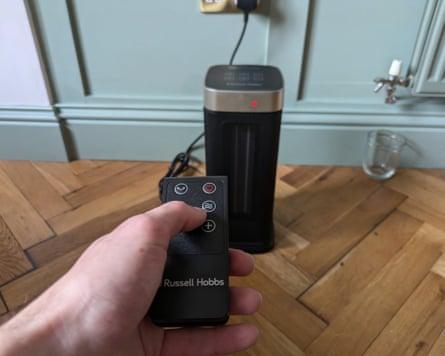
Staying warm matters, so I dug deep to test the models featured in this guide.
I set up each model in my living room and blasted them at the maximum temperature. I measured the room’s air temperature using a digital thermometer at regular intervals to see how powerfully each heater was warming the space. Bravely risking sauna-like conditions, I took each measurement from the centre of the room and kept the windows and door shut during each heater’s test.
Of course, temperature gain isn’t the only measure of an electric heater’s quality. I also assessed each model’s noise levels from the same position at regular intervals, and used an infrared thermometer after each test to judge whether the heater would be safe to touch. To gauge energy efficiency, I plugged the heaters into a power usage meter during testing.
I was keen to try each heater’s special features, so I tested extras such as timed heating and smartphone operability. I ended up testing 12 heaters, and I believe that the nine models listed below are worthy of your consideration.
Some brands did not want the heaters I tested back, so those will be donated for fundraising to Cat Action Trust 1977, a small national charity dedicated to the welfare of feral cats.
The best electric heaters in 2026
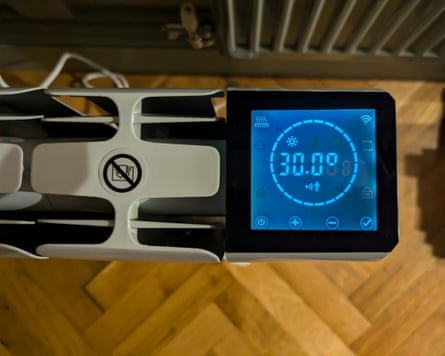
Best electric heater overall:
Beldray 2,000W smart ceramic core radiator
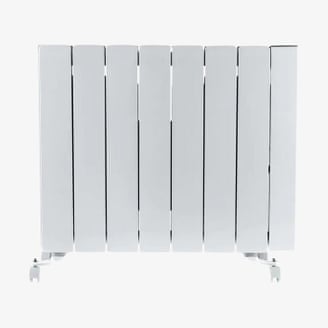
Beldray
2,000W smart ceramic core radiator
£206.75
What we love
Excellent selection of modes and powerful performance
What we don’t love
The digital display is a little cluttered
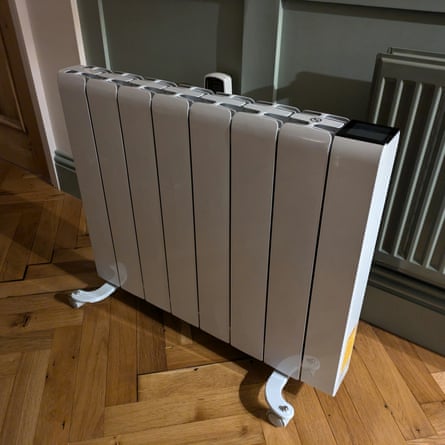
The Beldray smart radiator is packed with smart features, including multiple modes – Economic, Frost Prevention, Timer and Comfort (read: gratuitously warm). There’s also a sensor mode that detects movement and raises the temperature when someone’s nearby.
There are two ways to incorporate this heater into the home: as a portable, freestanding unit on casters, or permanently wall-mounted. Suitable fixings are included for both options.
Why we love it
It takes a little while to warm up, but within about 10 minutes, I really started to feel this heater’s benefit. After half an hour, the room was wonderfully snug throughout, and pretty much infernal right above the heater. In most spaces, you’d be able to use this model at a setting well below the 30C maximum. It’s practically silent during operation, save for the occasional soft clank as the metal warms up.
The touch control on the radiator itself is pretty intuitive, but the display could make it clearer when heating has started. I found myself presented with lots of symbols vying for that rarest resource: my attention. Personally, I preferred controlling the heater using its wifi-enabled app, which will be handy for winter-wary users who’d like to fire up their radiator before getting out of bed.
It’s a shame that … the front panels of the radiator stay very hot for a while after use. If you’re concerned about a child or pet, set an appropriate maximum heat level using the temperature limitation feature.
Temperature increase during testing: 5.2C
Average noise level: 28dB
Enclosure temperature after an hour: 87.2C
Running cost an hour on maximum: 55p
Size: 57 x 79.3 x 8cm (HWD)
Weight: 19.3kg
Beldray
2,000W smart ceramic core radiator
£206.75
What we love
Excellent selection of modes and powerful performance
What we don’t love
The digital display is a little cluttered
Best budget electric heater:
Russell Hobbs oscillating ceramic 2kW heater
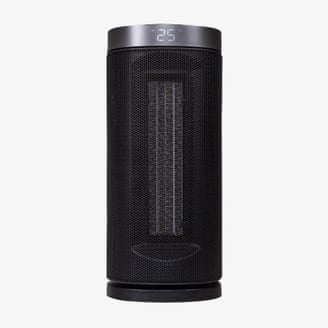
Russell Hobbs
Oscillating ceramic 2kW heater
£49.68
What we love
Quality and performance are great for the price
What we don’t love
Its on-unit controls are a trifle clunky
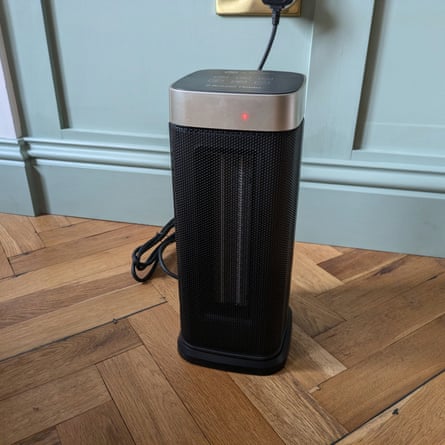
Although it’s compact and affordably priced, the Russell Hobbs oscillating ceramic 2kW heater promises the kind of powerful, efficient heating you might expect from a more expensive model. It has some higher-end features, too, including oscillation (the heater rotates) and an Eco mode that adapts heating to the room temperature.
Why we love it
Without a doubt, this is one of the best budget-friendly heaters I’ve tested. It spreads warm air throughout the room, even when used in its static mode. Activating oscillation with a press of a button on the remote control (or the on-unit control panel) only makes the effect more pronounced. The air directly in front of the heater felt very hot when I used a high temperature setting.
This heater has quite a low-pitched operating noise, and while it’s a little loud, I find this more agreeable than the high-pitched whine you get with some fan heaters. I also appreciated its small footprint, bleep-free option (perfect for timer-based heating at night) and safety features, which include automatic shut-off if the heater were to topple over.
It’s a shame that … the on-unit control buttons are a little tricky to press. But I’m splitting hairs here – this is a brilliant heater for the price.
Temperature increase during testing: 6.3C
Average noise level: 51dB
Enclosure temperature after an hour: 59.1C
Running cost an hour on maximum: 51p
Size: 33.5 x 15.5 x 14.8cm (HWD)
Weight: 1.9kg
Russell Hobbs
Oscillating ceramic 2kW heater
£49.68
What we love
Quality and performance are great for the price
What we don’t love
Its on-unit controls are a trifle clunky
Best fan electric heater:
Dreo PTC fan heater Solaris 718
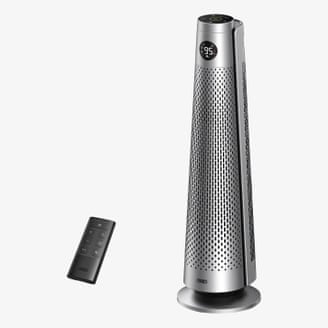
Dreo
PTC fan heater Solaris 718
£118.98
What we love
Quieter operation than most fan models, despite its power
What we don’t love
Relatively high energy usage
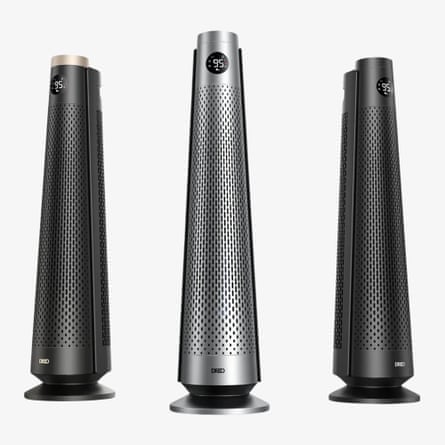
I was instantly impressed with this obelisk-shaped fan heater from Dreo. Within a few seconds of activation, it had begun to make a chilly room feel cosy. And after five minutes of heating at the highest of the five available settings, my jumper was well and truly off.
Why we love it
For a powerful fan model (drawing up to 2,000W), this is an impressively quiet heater, producing a deep, rushing sound as opposed to a harsh roar. I measured the noise at 46dB while using the highest setting – far quieter than any other fan heater I’ve tested. Operation is simple, with either the remote control or the on-unit buttons tapping into timed heating, lateral oscillation and a child lock. You can also use this as a tower fan for cooling, with three settings to choose from.
The Solaris 718 has some heat-sensitive features to guide or control your usage. The Eco mode automatically chooses a heat setting to keep the room at a specified temperature, and there’s an LED indicator ring on the top that glows different colours to tell you whether the room is cold or hot (how Dreo defines these states, we know not).
It’s a shame that … it’s quite energy-intensive on a high heat setting, and the elaborate grilles on the front and back of the heater are not the easiest to clean.
Temperature increase during testing: 5.9C
Average noise level: 46dB
Enclosure temperature after an hour: 40.2C
Running cost an hour on maximum: 55p
Size: 75.4 x 20.1 x 20.1 cm (HWD)
Weight: 3.6kg
Dreo
PTC fan heater Solaris 718
£118.98
What we love
Quieter operation than most fan models, despite its power
What we don’t love
Relatively high energy usage
Best stove-style electric heater:
Everhot electric heater
Everhot
Electric heater
£1,199
What we love
Beautiful looks and top-notch cast iron construction
What we don’t love
You’ll need plenty of floor space to accommodate it
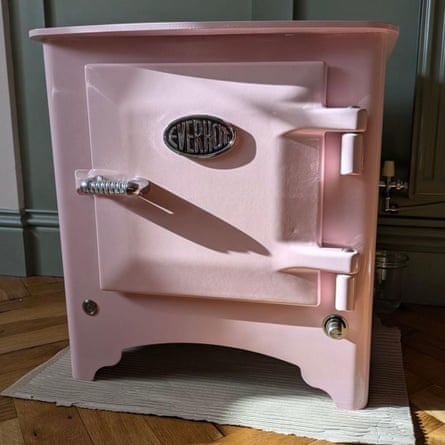
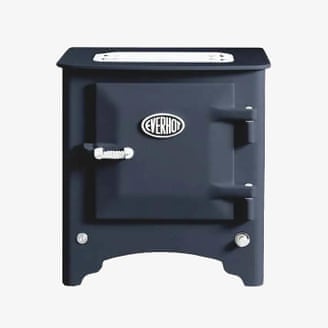
This cast-iron model is surely the nicest-looking electric heater of them all. It would make a fabulous addition to most interior schemes – especially if you have an empty fireplace or alcove that needs filling.
Why we love it
Far from just a talking point, Everhot’s heater serenely produces 1.5kW of heating power via its stove-top vent. It warmed the space effectively and near-silently during my testing, resulting in a gradual increase in room temperature.
The controls are simple, with just a power switch and heat-setting dial to master. Both components have a lovely finish, in keeping with the generally outstanding quality of the appliance.
While the door on this model is non-functioning, you can get a similar model with an integrated oven and a working door, which understandably comes at a higher price.
One note of caution: the top of this stove gets extremely hot during and after use, so this heater may be unsuitable in households with pets or children.
It’s a shame that … the price of this heater is too high for most buyers, especially if you’ll use it only occasionally. With that said, if you’re looking for an electric stove to use regularly, this one’s for you.
Temperature increase during testing: 3.8C
Average noise level: 34dB
Enclosure temperature after an hour: 105.2C
Running cost an hour on maximum: 43p
Size: 50.8 x 48.7 x 41cm (HWD)
Weight: ~40kg (each model is handmade, so some variation is inevitable)
Everhot
Electric heater
£1,199
What we love
Beautiful looks and top-notch cast iron construction
What we don’t love
You’ll need plenty of floor space to accommodate it
Best efficient electric heater:
Mill wifi max portable heater 1,500W
Mill
Wifi max portable heater 1,500W
from £169
What we love
It’s effective and energy efficient
What we don’t love
Takes up more floor space than expected
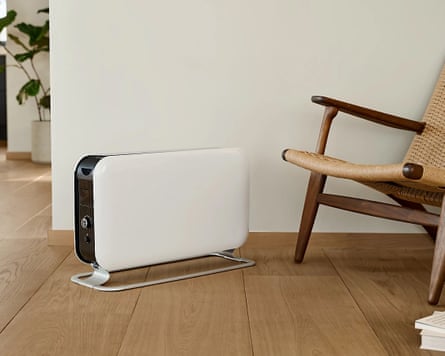
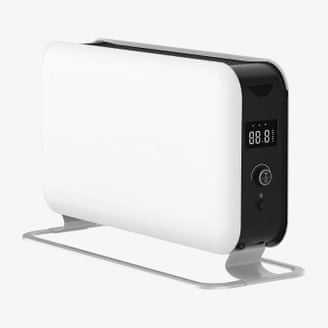
Norwegian brand Mill promotes this heater’s wifi operability first and foremost – but I believe its real strength is its near-silent, highly efficient heating. Barely detectable by sound meter, it subtly heated my cold living room to a comfortable temperature in less than 10 minutes while using less electricity than any comparable model.
Why we love it
There are two ways to operate the heater: via the Mill Norway smartphone app, or using a dial and LED display on the side of the unit. The app brings some fancier functionalities such as remote operation and weekly heating programmes, but the control that will really matter to most users is the on-unit dial, which effortlessly adjusts the thermostat to temperatures up to 35C.
Unusually for a heater, this model is bathroom suitable with IPX4 moisture resistance. That means it can withstand the occasional spray of water, although it definitely shouldn’t be used too close to the bath or shower. The oval-shaped base – which requires assembly using your own screwdriver – feels stable and is gentler on flooring than feet or casters.
It’s a shame that … the heater takes up quite a lot of floor space, and setting up wifi operation via the app proved fiddly.
Temperature increase during testing: 7C
Average noise level: 26dB
Enclosure temperature after an hour: 65.8C
Running cost an hour on maximum: 41p
Size: 38.5 x 62 x 24.5cm (HWD)
Weight: 5.5kg
Mill
Wifi max portable heater 1,500W
from £169
What we love
It’s effective and energy efficient
What we don’t love
Takes up more floor space than expected
The best of the rest
Swan 700W plug-in mini fan heater
Swan
700W plug-in mini fan heater
from £10.90
What we love
A useful option for warming up at close quarters
What we don’t love
Noisy operation and relatively limited heating power
Best for: small rooms too short on space for a conventional heater
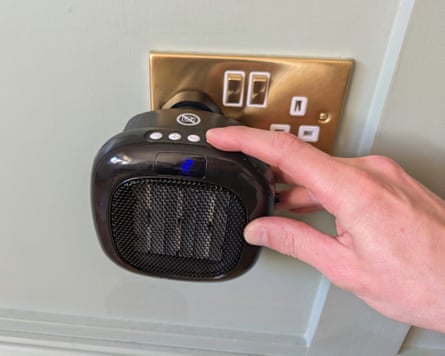
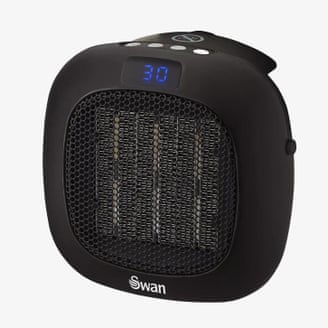
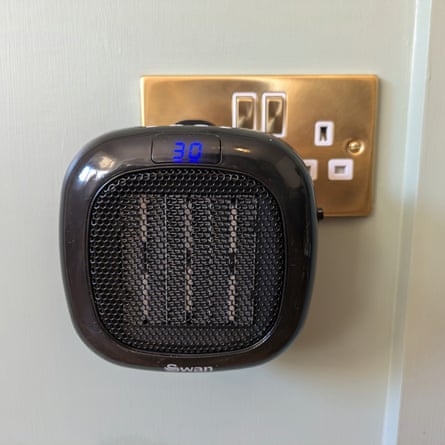
This tiny power socket heater from Swan is designed to plug straight into an outlet and deliver warmth in your direction of choice. I had it set up and appreciably warming my living room within about 30 seconds.
In terms of extra features, Swan has kept this heater straightforward and practical. Using the controls on the top, you can adjust the output temperature and set a timed heating duration between one and 12 hours. Selected settings are shown clearly on the digital display.
You can also use the plug rotation button (on the right-hand side) to switch the heater’s position, which partly makes up for the restriction of using it only in a place where it can be plugged in.
It didn’t make the final cut because … it’s noisy. This heater would be best suited to people who spend a lot of time wearing headphones, or for heating a room before you enter it.
Temperature increase during testing: 2.4C; average noise level: 56dB; enclosure temperature after an hour: 60.4C; running cost an hour on maximum: 18p; size: 14 x 11 x 12cm (HWD); weight: 0.63kg
Swan
700W plug-in mini fan heater
from £10.90
What we love
A useful option for warming up at close quarters
What we don’t love
Noisy operation and relatively limited heating power
Duux Threesixty 2 ceramic heater
Duux
Threesixty 2 ceramic heater
from £89
What we love
Efficient, temperature-sensitive heating
What we don’t love
Flawed connectivity proves an obstacle to smart features
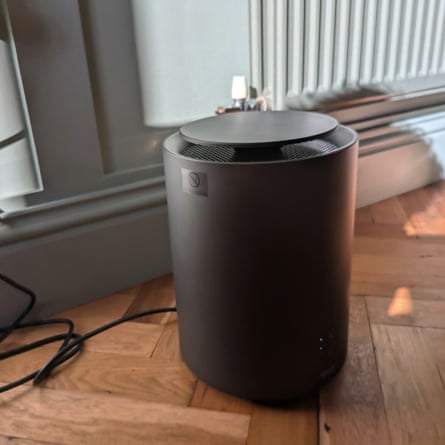
Best for: powerful heating with a small footprint
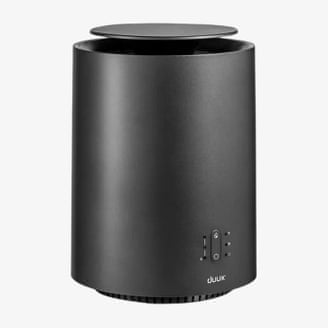
Looking like the defiantly well-adjusted love child of a smart speaker and an air purifier, the Duux Threesixty 2 is clearly the techiest heater on our list. Its minimalist design and pleasing packaging positively beg you to feature it in a social media unboxing video. On a more practical note, the Threesixty 2 delivers heated air in all directions, and has a PTC element that delivers temperature-appropriate heating thanks to its electronic properties (the element’s electrical resistance is such that it heats up intensively when the air is cold; and warms gently in milder conditions).
I felt the warming effect of this compact fan heater pretty much straight after turning it on. There are three on-unit temperature settings, giving you some control over the heat level – but less than you’d get with most heaters. As a simple, manual fan heater, the Threesixty 2 works great, thoroughly warming the space while making less noise than your standard fan model.
It didn’t make the final cut because … controlling this smart heater via smartphone or smart assistant is difficult. I found the Duux app too buggy to use.
Temperature increase during testing: 7.6C; average noise level: 54dB; enclosure temperature after an hour: 58.3C (lid); running cost an hour on maximum: 50p; size: 30 x 22 x 22cm (HWD); weight: 2.4kg
Duux
Threesixty 2 ceramic heater
from £89
What we love
Efficient, temperature-sensitive heating
What we don’t love
Flawed connectivity proves an obstacle to smart features
Devola wifi-enabled smart glass panel electric heater
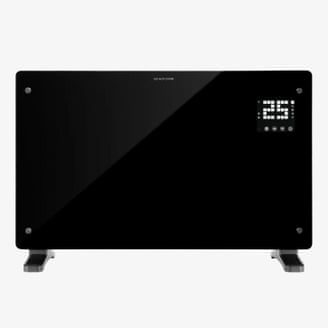
Devola
Wifi-enabled smart glass panel electric heater
from £89.90
What we love
Its sleek, contemporary design
What we don’t love
Elevated risk of breakage during assembly
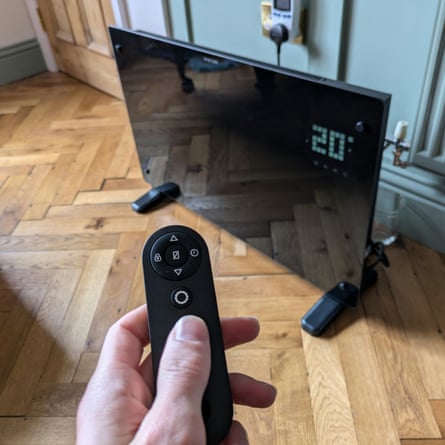
Best for: extensive smart functionality at an affordable price
This smart-assistant-compatible, glass panel heater from Devola is as sleek as they come, with a well-integrated digital on-unit display and controls. Plus, connect it to your wifi and smartphone, and you’ll have access to advanced features, including voice control and timed heating. During my testing, it operated quietly and heated the space steadily.
A little assembly is required before use, with the exact steps depending on whether you wish to use the heater as a freestanding or wall-mounted unit. I chose the freestanding configuration and had the plastic feet attached to the bottom within a few minutes (taking great care during handling, as dropping this glass-panelled heater could be disastrous).
It didn’t make the final cut because … operating the heater with the remote control isn’t exactly intuitive. You need to go into its settings menu and set a temperature for each of the three operating modes, rather than raising or lowering the heat manually. Smartphone app operation proves easier.
Temperature increase during testing: 6.4C; average noise level: 34dB; enclosure temperature after an hour: 44.6C; running cost an hour on maximum: 51p; size: 47 x 65 x 8cm (HWD); weight: 7.68kg
Devola
Wifi-enabled smart glass panel electric heater
from £89.90
What we love
Its sleek, contemporary design
What we don’t love
Elevated risk of breakage during assembly
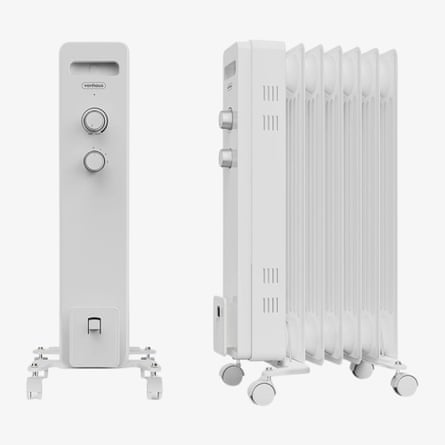
VonHaus small oil-filled radiator 1,500W
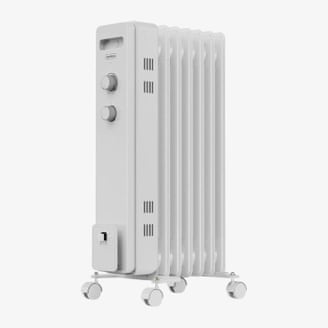
VonHaus
Small oil-filled radiator 1,500W
from £44.99
What we love
It costs little and works quietly
What we don’t love
Modest heat output
Best for: those on a strict budget
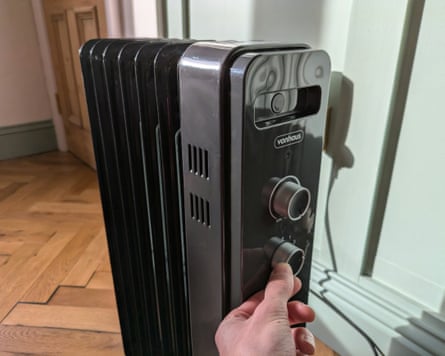
This small, portable, inexpensive oil-filled radiator is a practical choice for occasional use. There are just two controls to master: a power selection switch (which toggles between 600W, 900W and 1,500W) and a thermostat dial.
I found this radiator produced enough heat to make a chilly room comfortable, and it used relatively little electricity to do so. You can use the thermostat dial to set the desired temperature at which the heater will maintain the room – saving you from overheating and overspending on energy.
The heater is quiet, except for the occasional quiet gurgling of oil, which is quite a pleasant sound in my opinion.
It didn’t make the final cut because … it heats only moderately. While this model does a good enough job in a small space, it’s not suitable for heating a medium-sized or large room.
Temperature increase during testing: 2.7C; average noise level: 33dB; enclosure temperature after an hour : 70.6C; running cost an hour on maximum: 24p; size: 62 x 33.5 x 24cm (HWD); weight: 6.9kg
VonHaus
Small oil-filled radiator 1,500W
from £44.99
What we love
It costs little and works quietly
What we don’t love
Modest heat output
What you need to know
How much should you spend on an electric heater?
Electric heaters vary wildly in price, from less than £50 to £500 and beyond. Swanky ones can cost more than £1,000.
How much you spend should depend, above all, on how much you intend to use it. For many users, an electric heater is an occasional-use item to warm us up in out-of-the-ordinary circumstances – such as when we can’t use the central heating due to home improvement work or a malfunction. If this sounds like you, then an electric heater costing under £100 should be appropriate for your needs.
However, some buyers want an electric heater to use more regularly. You may use yours to heat just one room in your home, thus avoiding the need to use central heating or install a wood-burning stove. In such cases, spending more could give you a more attractive design and advanced features, such as smart operability.
For reference, the total cost of adding a new plumbed-in radiator to an existing heating system tends to run between £200 and £600.
Are electric heaters cheap to run?
In a word, no. Electricity costs more than gas in the UK, relative to the power delivered to appliances. If an electric heater and a boiler-powered radiator had the same efficiency, it would cost more to produce the same level of heat with the electric unit.
That said, using an electric heater in one room could prove more cost-effective than turning on central heating throughout the home. If you’re willing to experiment with your heating habits to reduce your energy costs, an electric heater could be part of the cost-saving combination.
Some electric heaters cost less to run than others. In particular, models with a lower wattage, simple functionality and efficient design tend to have lower running costs.
Which is the most efficient electric heater?
Based on our testing, the cheapest electric heater to run is the Swan 700W plug-in mini fan heater.
However, assessing an electric heater’s efficiency also requires us to consider its capability to heat a room adequately. This is tricky to define, as the heating performance needed depends on factors including the size of the space and your preferred ambient temperature.
Out of the models featured in this guide, I would consider the Mill wifi max portable heater 1,500W to be the most efficient electric heater for medium to large rooms, while the VonHaus small oil-filled radiator 1,500W is the most efficient electric heater for small rooms (provided you’re happy with moderate heating).
Ceramic heaters vs fan heaters: which type is better?
If you’re choosing a new electric heater, there’s a good chance that you’ll settle on either a ceramic heater or a fan heater. These two popular types have contrasting pros and cons.
Ceramic heaters have heating elements made from – you guessed it – a ceramic material. They often operate very quietly (or practically silently, in my experience), and they keep radiating heat for a while after the power has been turned off. Some examples take a while to heat up.
Fan heaters take in air, heat it up rapidly and push it out into the room. They can heat a space almost instantly, and then quickly cool down after deactivation. Most fan heaters are relatively noisy, but on the plus side, they often have nice-to-have features such as oscillation and cooling modes for warmer weather.
Ultimately, both ceramic heaters and fan heaters can do a fine job of keeping you warm. The former are quieter, while the latter are quicker.
What to do with your old electric heater
Electric heaters have a shelf life, with warranty periods often in the range of two to five years. Many models stay in good condition for longer, but when faults occur with components, such as the heating element or thermostat, it may prove more economical to replace your heater than it is to repair it.
We would urge you to explore having a broken electric heater repaired, especially if it’s under warranty. However, when buying a new model is unavoidable, there are some disposal options that will minimise the environmental impact.
The best solution in most cases is to take the electric heater to your local recycling centre (the Recycle Now website will help you find one), where it can be processed as Waste Electrical and Electronic Equipment. Alternatively, you could try listing the heater for free on local marketplace websites as a “spares or repairs” item.
For more:
The best electric blankets and heated throws
The best hot-water bottles for comfort and cosiness
The best heated clothes airers to save time and money when drying your laundry
Pete Wise is a journalist based in Leeds, with more than a decade’s experience covering everything from global development and social causes to technology and music. As a home renovator and music studio renter, Pete has spent countless hours hunkering over electric heaters, little knowing that each tweak of the thermostat was a small step towards writing this article










 English (US) ·